8 Boundaries: Overview

A soap bubble is pure surface with nothing inside it but air, and yet it is entirely complete, which is the holographic principle in miniature: all the information in a volume lives on its boundary, and depth is just surface you haven’t turned over yet.
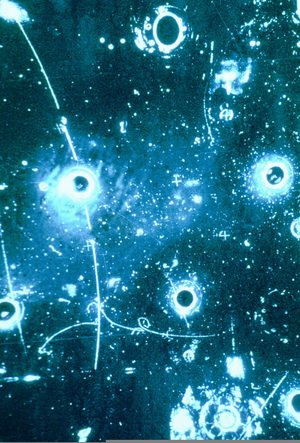
A child stops for a soap bubble not from puzzlement but from recognition, the bubble is pure surface with no hidden interior, which is the holographic principle made visible, and the child is seeing the structure of her own existence without knowing it.
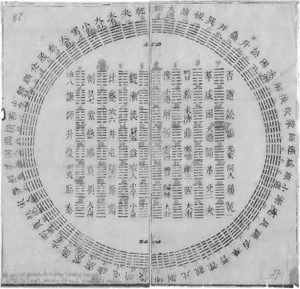
Three centuries ago a philosopher proposed windowless monads each containing a complete representation of the universe from its own perspective, dismissed as baroque fantasy until a physicist showed that a lower-dimensional boundary theory can encode an entire higher-dimensional interior, which is strikingly close to what the monads were doing all along.
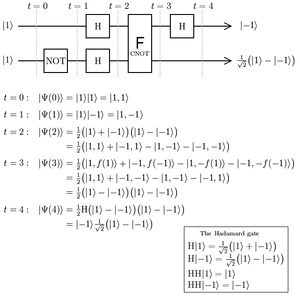
Spacetime geometry may be constituted by quantum entanglement, sever the entanglement and the spacetime tears, which means asking where consciousness is in spacetime may be malformed, because both may be emergent from something more fundamental that has physical and experiential aspects simultaneously.

At any given level, stable combinations become the vocabulary for the next level up, atoms into molecules, molecules into cells, cells into organisms, and this architecture of sentences becoming words is the generative mechanism behind why more keeps becoming different.
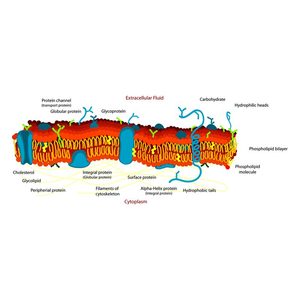
The boundary between two interiorities is not a surface but an act, communication itself, and it descends through fractal layers of translation, stack meeting stack through stack, so that the mystery is not that it sometimes fails but that across so many transductions anything gets through at all.
One philosopher looked for the self and found only a bundle of perceptions; a contemplative tradition looked and found no fixed owner; a process metaphysics found a society of occasions stable enough to appear permanent, three traditions arriving independently at the same dissolution of the substantial self.
One philosopher diagnosed the ghost as a category mistake, another named what was lost when materialism expelled it, and process philosophy dissolved the problem entirely, the ghost was never separate from the machine because the machine, all the way down, has an inside.
Cognition is not the processing of representations inside a passive receiver but the enactment of a world, organism and environment co-arising through active engagement, so that even a bacterium swimming toward a chemical gradient is not following a rule but making a world in which that gradient matters.