6 Frameworks: Overview
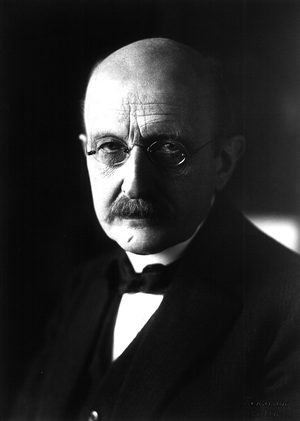
A new scientific truth does not triumph by convincing its opponents but by outlasting them, the old map’s holders never convert, they retire and die, and the next generation simply grows up inside the new one.
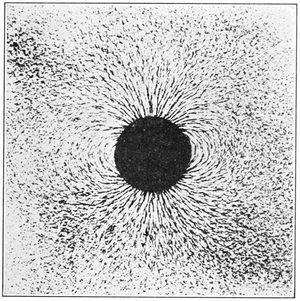
You don’t need to convert everyone, you need to seed the right clusters in a medium that’s ready to shift, because local alignment propagates through neighbors until figure and ground flip and the remaining disorder is what’s surrounded.

We never access reality directly, only the story we tell about it, and the deeper the level of narrative, from dramatic arc to perceptual label to conceptual metaphor, the less it feels like story and the more it feels like the given.
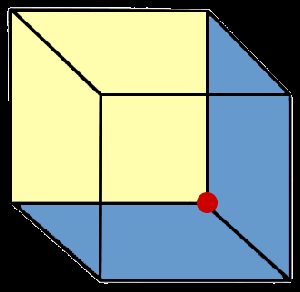
When two claims seem contradictory and both are well-grounded, the contradiction usually lives not in reality but in a framework too small to hold both, and the resolution is not to pick a side but to find the larger frame where both become aspects of the same truth.
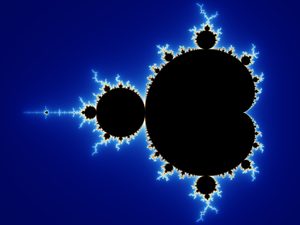
The number was just a number, arrived at by routine steps, but its accumulation produced something that transcended what the system could say about itself, the same pattern by which chemistry becomes life and quantity becomes quality.

The incompleteness theorem does point beyond mechanism, but the arrow does not point uniquely at human minds, it points at what complexity does whenever events nest deeply enough, which includes the machines we are building.
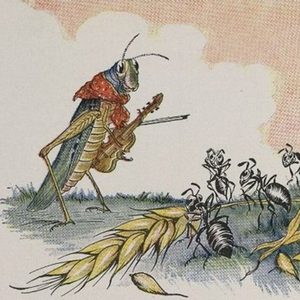
The fable taught us that play is what you do instead of working, but the grasshopper was doing something the ant structurally cannot, operating in the frame-free, will-suspended mode where certain things happen that directed effort will never reach.
A pronoun is an arrow that needs a shared world to land in, it carries almost no descriptive content, which is precisely why it reveals the infrastructure that reference requires, from the royal “we” as ontological honesty to the Sufi “Hu” as contemplative instrument to the unsettled “you” we aim at a language model.
The label “devil’s interval” began in medieval music theory as a warning about a specific dissonant interval, but the cultural pattern it names — calling unfamiliar harmonics evil because the framework cannot accommodate them — has been ported across centuries onto every tradition that bent notes off the equal-tempered grid, and the irony is that the bending almost always leads not toward dissonance but toward consonances simpler and older than anything the keyboard can reach.